
The 6-Day Beijing & Great Wall Itinerary: The Health-Smart Version

A 6-day Beijing itinerary needs no malaria pill (WHO declared China malaria-free in 2021) and no altitude prep (Beijing and the Great Wall corridors sit near sea level). What it does need is a plan for two things: street food and the clock. CDC rates travelers' diarrhea risk as moderate outside luxury hotels, driven by hutong stalls and Wangfujing snack streets, so carrying azithromycin plus an antispasmodic for cramping is the standard precaution. Beijing also runs 12 to 13 hours ahead of the US East Coast, one of the largest shifts in international travel, and CDC's 2026 Yellow Book notes eastward adaptation averages just 1 hour per day. Build 2 buffer days before the Great Wall hike and consider a short-acting sleep aid for the first nights.
Beijing asks less of your body than almost any other major international trip; no altitude to climb into, no malaria zone to plan around, no yellow fever certificate to track down. What it does ask is that you take the food and the clock seriously. The Forbidden City, the hutong alleys, and the Great Wall are all here for the seeing, and Wangfujing's snack stalls and hutong noodle counters are half the reason to come. That same food is the trip's real health variable, alongside a body clock landing 12 to 13 hours off schedule. This itinerary builds in a buffer day before the Wall hike, treats the street food honestly instead of pretending you'll avoid it, and gets your sleep and your gut ready before you land.
Who this itinerary is for
This suits first-time China travelers who want the marquee sights, the Forbidden City, Tiananmen Square, and a proper Great Wall day, without a multi-city itinerary or a rural expedition. Six days is enough to cover Beijing's core sites at a walkable, unhurried pace, with one full day carved out for the Wall so it doesn't feel rushed.
It also suits returning travelers who did a whirlwind first trip and want to slow down, particularly around the hutong neighborhoods and food, this time. The trip assumes reasonable fitness for a lot of walking on stone and stairs (Forbidden City, Jingshan Park, and Mutianyu's ramparts all involve sustained stair climbing) but no technical hiking or altitude conditioning. If mobility on uneven, stepped terrain is a concern, Badaling's more graded paths and funicular access are a reasonable Great Wall substitute for Mutianyu, at the cost of considerably heavier crowds.
It is a poor fit for travelers hoping to combine Beijing with Xi'an's Terracotta Warriors, Shanghai, or a Yangtze cruise in the same week; those additions mean domestic flights or high-speed rail, a longer trip, and a different health picture (more time zones of internal travel, more meals in more unfamiliar settings). This itinerary is intentionally single-city and single-focus so the health guidance can stay specific rather than generic.
The route
This itinerary stays entirely within greater Beijing, no bullet trains or domestic flights required, which keeps the logistics simple and the health picture narrow: food and jet lag, full stop. Base yourself in one hotel for all 6 nights, ideally in Dongcheng (near the Forbidden City and hutongs) or Chaoyang, both well connected by Beijing's subway system.
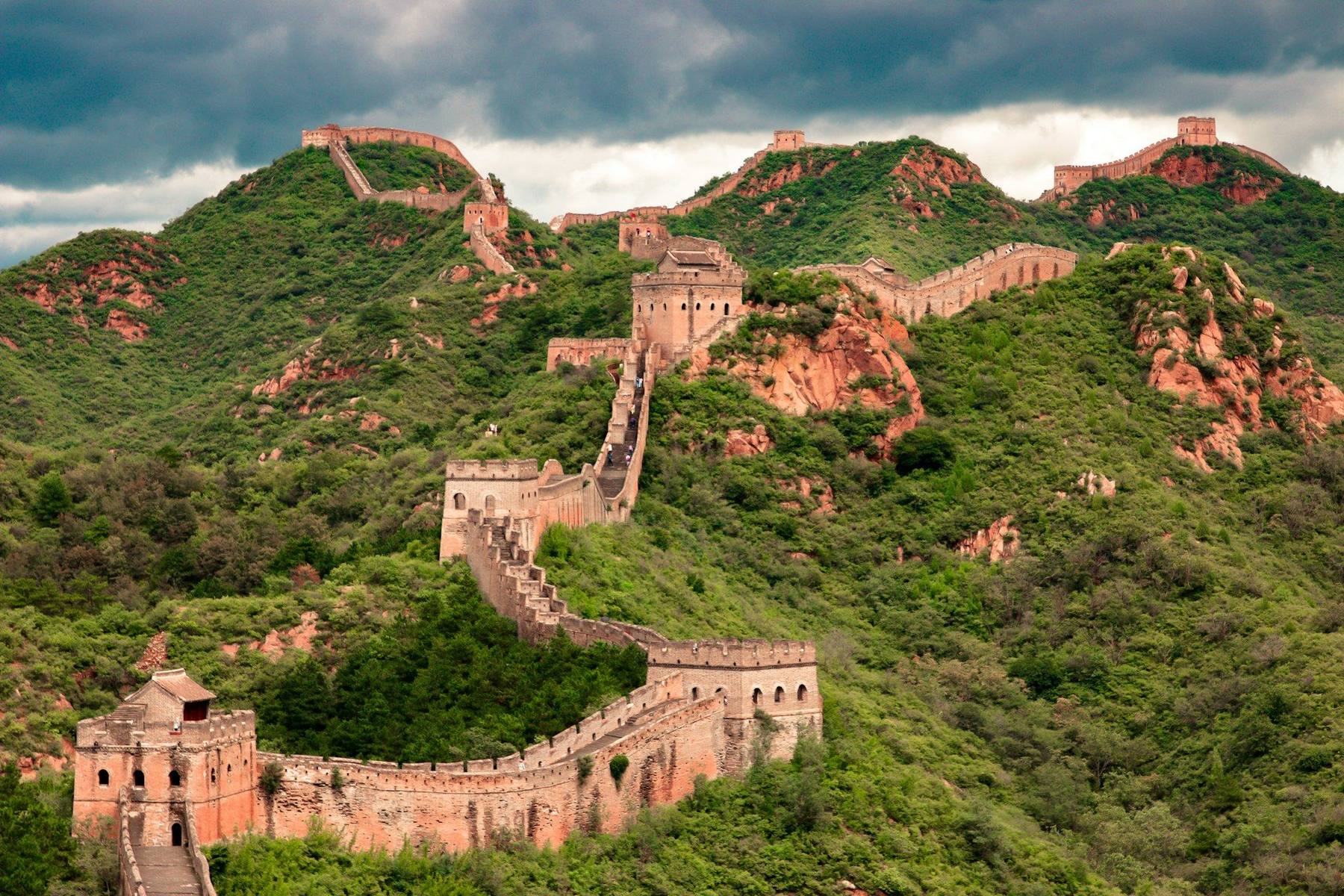
The pacing front-loads the city's biggest walking days (Forbidden City on day 2, hutongs and street food on day 3) before the physically demanding Great Wall day trip on day 4, then eases off with the Summer Palace and Lama Temple on day 5. Mutianyu, roughly 70 km (43 mi) northeast of central Beijing, is the recommended Wall section over the closer but far more crowded Badaling, which draws an estimated 70% of all Great Wall visitors and can approach 80,000 people on a single peak day. Mutianyu's restoration, cable car access, and lower crowds make it the better fit for a traveler who wants the classic Wall photo without a shoulder-to-shoulder hike.

Day-by-day plan
Day 1: Arrive Beijing, anchor to local time
Most international flights land in the afternoon or evening. Resist the urge to crash immediately. Get outside for even 20 to 30 minutes of daylight if you land before dark, eat a light local-time-appropriate meal, and go to bed close to Beijing's actual nighttime hours rather than your home-time bedtime. CDC's 2026 Yellow Book identifies timed light exposure as one of the better-supported tools for nudging the internal clock, and starting on arrival day gives you a full 5 nights to close the gap before you fly home.
Day 2: Tiananmen Square, the Forbidden City, and Jingshan Park
This is the trip's biggest single walking day. The Forbidden City covers roughly 180 acres (72 hectares) and around 980 surviving buildings, and there's no way to see even a fraction of it without racking up steps on hard stone paving with minimal shade in summer. Budget the full day, wear shoes you've already broken in, and carry more water than feels necessary. Finish by climbing Jingshan Park's hill just north of the palace for the classic rooftop panorama back over the Forbidden City at golden hour, weather and air quality permitting.
Day 3: Temple of Heaven, hutong alleys, and Wangfujing street food
Morning at the Temple of Heaven's park and grounds, a quieter, more meditative counterpoint to day 2's palace crowds; the circular Hall of Prayer for Good Harvests is worth the visit on its own. Spend the afternoon wandering Nanluoguxiang or another hutong lane for a sense of pre-modern Beijing's residential fabric, then head to Wangfujing's snack street for dinner. This is deliberately the trip's highest food-exposure day, and that's the point: sampling unfamiliar street food, from jianbing griddle crepes to candied hawthorn skewers to hand-pulled noodles, is a real reason to visit, not a risk to engineer around entirely. Favor stalls with visible turnover and a line of locals, skip anything sitting out at room temperature, and have your travel-medicine kit within reach starting tonight.
Want the health prep for China?
Get a 60-second pre-trip check: the vaccines, prescriptions, and altitude/seasonality notes that change the plan — built for your exact dates.
Day 4: Great Wall day trip: Mutianyu
Plan for a 90-minute to 2-hour drive each way, longer if traffic is heavy leaving the city. At Mutianyu, take the cable car or shuttle up to skip the steepest initial climb, then walk the restored ramparts at your own pace; a toboggan run and a second cable car option make the descent easier than the ascent. This is a full-day commitment once travel time is factored in, so treat it as the trip's physical high point and keep day 3 lighter on your feet if you can. Layer up: the ridge runs noticeably cooler and windier than central Beijing regardless of season.

Day 5: Summer Palace and the Lama Temple
A deliberately easier day after the Wall. The Summer Palace's Kunming Lake and lakeside pavilions make for a slower, more scenic pace, whether you walk the lakeside corridor or take a boat across. In the afternoon, the Yonghegong Lama Temple offers a change of tone, an active Tibetan Buddhist temple rather than an imperial monument. By this point your body clock should be settling; if sleep is still rough, this is a good day to reassess morning light exposure and afternoon caffeine timing rather than pushing through on willpower alone.
Day 6: Free morning, departure
Keep the morning open for a last hutong coffee, a final pass through Wangfujing, or simply packing without rushing. Beijing's cultural sites reward slow mornings, and building in slack on the last day means a delayed subway or a long taxi queue to the airport doesn't wreck the trip's final hours. The flight home, functionally a westward-style adjustment for most US travelers, tends to be the easier direction to recover from once you land.
Health prep for this trip
Start 4 to 6 weeks out with a provider conversation about hepatitis A vaccination, which CDC recommends for most travelers to China given the food- and water-borne exposure, and confirm your routine vaccines (MMR, Tdap) and seasonal flu or COVID-19 vaccines are current. Wandr's China destination guide covers the broader country-level health picture if your trip grows beyond Beijing. This is also the point to request azithromycin and dicyclomine through Wandr's Beijing & Great Wall Travel Pack, so both prescriptions are in hand well before departure rather than something you're chasing down the week of the trip. Azithromycin is the antibiotic to carry, not necessarily take, for a street-food day that turns into more than a mild stomach, and dicyclomine handles the cramping that tends to ride along with it.
In the final week, if the 12-to-13-hour time shift is a real concern, ask about hydroxyzine for the first few nights; it won't reset your clock by itself, but it can help you fall asleep while morning light exposure does the slower work of shifting your circadian rhythm. Three to five days before departure, shifting your sleep schedule 20 to 30 minutes earlier each night gives your body a head start on the eastbound adjustment.
What to pack
Broken-in walking shoes rated for stone paths and stairs, since days 2, 3, and 4 are all step-heavy. A light layer and windbreaker for the Great Wall ridge, which runs cooler and windier than the city center regardless of season. A reusable water bottle; tap water in China isn't safe to drink outside Hong Kong, but bottled water is sold everywhere from convenience stores to hotel lobbies. Hand sanitizer and a small pack of tissues, since public restrooms don't always stock either. Your travel-medicine kit (azithromycin, dicyclomine, and hydroxyzine if you've opted in), packed in carry-on rather than checked luggage. A portable phone charger, since a full day of maps and photos at Mutianyu drains a phone fast, and an offline map, since hutong lanes don't always route cleanly through standard map apps. A basic phrasebook or translation app; English signage thins out quickly past the major sites.
Best time to go and what to avoid
Beijing's heating season (roughly November through March) tends to coincide with worse particulate air quality than the shoulder seasons, so travelers with asthma or other respiratory conditions get the most benefit from targeting April-May or September-October. Whatever month you land in, check a daily air quality index before committing to the Jingshan Park climb or a full Great Wall day, and treat an N95-style mask as a reasonable option on the worst-air days rather than an overreaction.
Cost expectations
Beijing runs cheaper than most people expect for a first-tier world capital. Budget travelers can manage on $50-70/day covering hostel or budget hotel, subway and rideshare transport, and street food and casual restaurant meals. Mid-range travelers booking a comfortable hotel, occasional taxis, a private Great Wall car and driver, and sit-down meals should plan for $120-180/day. The Great Wall day trip itself typically runs $40-80 per person for private transport plus cable car and toboggan tickets, more if booked through a hotel concierge versus arranged independently.
Day-by-day plan
| Day | What you're doing | Health note |
|---|---|---|
| 1 | Arrive Beijing, anchor to local time Land at Beijing Capital or Daxing, settle into a hotel in Dongcheng or Chaoyang, and start the jet lag reset immediately. | Get outside into daylight as soon as you land, even for 20-30 minutes, and hold off on a long nap. CDC's Yellow Book flags morning light exposure as one of the few tools with real evidence for shifting the body clock faster. |
| 2 | Tiananmen Square, the Forbidden City, and Jingshan Park Full day on foot through the Forbidden City's 180-acre grounds, then climb Jingshan Park's hill for the rooftop view back over the palace. | This is a 15,000-plus-step day on hard stone paving with limited shade. Carry water, wear broken-in shoes, and check the daily air quality index before you commit to the Jingshan climb. |
| 3 | Temple of Heaven, hutong alleys, and Wangfujing street food Morning at the Temple of Heaven park, afternoon wandering Nanluoguxiang's hutong lanes, evening testing the Wangfujing snack street. | This is the highest travelers'-diarrhea-exposure day of the trip. Eat where the line is long and the turnover is fast, and have azithromycin and dicyclomine packed in case a stall meal turns into more than a mild stomach. |
| 4 | Great Wall day trip: Mutianyu Roughly 90-minute to 2-hour drive northeast to the Mutianyu section, cable car or shuttle up, walk the restored ramparts, toboggan or gondola back down. | Mutianyu sits well under 1,000 m (about 3,280 ft), so this is a fitness day, not an altitude day; expect a lot of stairs and uneven stone, and dress in layers since the ridge is windier and cooler than the city. |
| 5 | Summer Palace and the Lama Temple Morning boating and walking the Summer Palace's lakeside pavilions, afternoon at the Yonghegong Lama Temple, easier pace after the Wall. | A lighter walking day. Good time to reassess how your body clock has settled and adjust caffeine and light exposure if sleep is still off by day 5. |
| 6 | Free morning, departure Last-minute Wangfujing shopping or a final hutong coffee, then transfer to the airport for the flight home. | Westbound flights home are the easier direction to adjust to (CDC's Yellow Book puts westward adaptation at about 1.5 hours per day versus 1 hour per day eastward), so most travelers recover from this leg faster than the outbound one. |
Frequently Asked Questions
No. WHO declared China malaria-free in 2021 after a 70-year eradication campaign, and CDC's 2026 Yellow Book rates the current transmission risk as very low nationwide, with imported cases the main concern rather than local spread. Beijing and the Great Wall day-trip corridors were never part of any malaria-endemic area. Save the antimalarial for a different itinerary; it isn't part of this kit.
Beyond routine vaccines (MMR, Tdap, and staying current on seasonal flu and COVID-19), CDC's Yellow Book recommends hepatitis A for most travelers to China, since food and water are the main exposure route. Typhoid is a lower-priority discussion for a Beijing-only urban itinerary like this one, CDC specifically notes it's not a significant risk in China's major cities, but it's still worth raising with a provider if your trip includes rural stops or the kind of street food this itinerary leans into.
No. The Mutianyu section sits under 1,000 m (about 3,280 ft), nowhere near the elevations that trigger altitude illness. CDC's altitude guidance for China is aimed at travelers heading to Lhasa (3,658 m), Shangri-La (3,280 m), or the Sichuan panda reserves (up to 4,400 m), not a Beijing-area day trip. Expect a leg-and-lung workout from the stairs, not an oxygen problem.
Being careful helps, but CDC rates travelers' diarrhea risk in China as low in luxury hotel dining and moderate everywhere else, and this itinerary is built around hutong stalls and the Wangfujing snack street, exactly the moderate-risk category. Most stomach upset from a bad meal is mild and passes with fluids and rest. Azithromycin is the antibiotic CDC favors as first-line empiric treatment across Asia because Campylobacter, a leading cause of traveler's diarrhea in the region, is widely resistant to older options like ciprofloxacin. The plan is to carry it and use it only if a case turns moderate to severe, at the Wandr standard of 500 mg once daily for 3 days.
Dicyclomine (Bentyl) is an antispasmodic that calms the gut cramping and spasm that often ride along with a food-related stomach upset, separate from treating the underlying cause. It pairs with azithromycin so you're covering both the infection and the discomfort, rather than just one.
Beijing runs 12 to 13 hours ahead of the US East Coast and 15 to 16 hours ahead of the West Coast, among the largest shifts in international travel. Per the ICSD-3 criteria cited in CDC's 2026 Yellow Book, jet lag disorder can be diagnosed after crossing as few as 2 time zones, and CDC notes eastward travel is harder to adapt to than westward, averaging about 1 hour of adjustment per day versus 1.5 hours per day heading home. Hydroxyzine (Vistaril) is a sedating antihistamine that can help you fall asleep on those first out-of-sync nights; it doesn't reset your clock on its own; morning light exposure and a consistent local schedule do most of that work.
It's worth checking, not panicking over. CDC's Yellow Book notes Beijing's air quality has improved substantially since the mid-2010s but still has poor-air-quality days, and travelers with asthma, other respiratory conditions, or cardiovascular disease are most likely to feel it. Check a daily air quality index during your trip and treat the Jingshan Park climb or a hazy Great Wall day as optional if the forecast is bad.
It's a real, if uncommon, risk worth knowing about. CDC's Yellow Book notes rabies is endemic in China's free-roaming dog population and that dog bites are commonly reported among tourists, though the highest-risk provinces (Hubei, Hunan, Guangxi, Guizhou) are outside this itinerary. The practical takeaway for a Beijing trip: don't approach street dogs or cats, and if you're bitten or scratched anywhere in China, treat it as a same-day medical issue, not something to wait out.
Spring (April-May) and fall (September-October) tend to bring milder temperatures and, on average, better air quality than the summer haze or winter heating season. Early October overlaps with China's Golden Week national holiday, when domestic travel surges and the Great Wall's more accessible sections get crowded, so Mutianyu over Badaling and a weekday visit both help if your dates land nearby.
Alec Freling, MD is a board-certified emergency medicine physician and co-founder of Wandr Health with ER experience treating returning travelers.