
The 4-Day Milford Track Itinerary: The Health-Smart Version
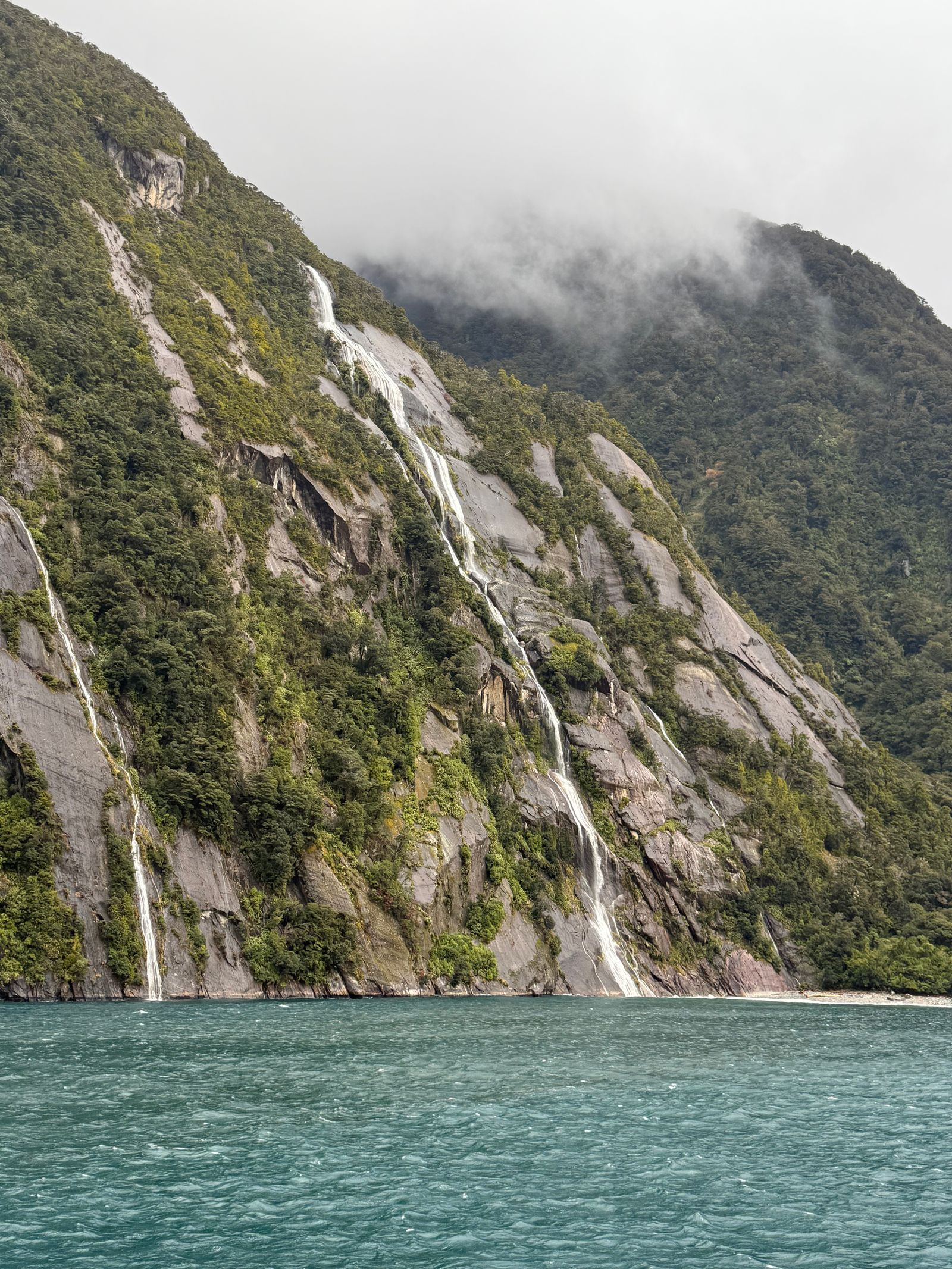
The Milford Track is a 53.5 km, four-day, three-night hut-to-hut trek through Fiordland National Park, walked in one direction from Glade Wharf to Sandfly Point over a 1,154 m high point at Mackinnon Pass (per NZ Department of Conservation). CDC classifies New Zealand as a low-risk country for travelers' diarrhea, its baseline "low risk" tier means under 8% of short-term visitors are affected, but the track's backcountry water resets that baseline. DOC advises boiling or treating all hut and stream water, since Giardia and Campylobacter can be present even in clear mountain water. Combined with no cell coverage and no exit before Sandfly Point, that is why Wandr's physicians build a self-treat kit into this itinerary rather than leaning on New Zealand's overall safety reputation.
New Zealand's overall health profile is about as reassuring as international travel gets: routine vaccines, safe tap water in the cities, and a CDC risk rating that puts it alongside Western Europe and Australia. The Milford Track does not break that reputation so much as it sidesteps it. Four days, one direction, 53.5 km through the heart of Fiordland National Park, and once you are past the first hut the only way out is forward, on foot, to a boat that runs on a schedule. That structure, not the country's baseline safety, is what should shape your prep. A short self-treat kit and a habit of treating your water turn a genuinely spectacular walk into one where a bad stomach day or a sore knee off Mackinnon Pass is an inconvenience instead of a crisis.
Who this itinerary is for
This is built for reasonably fit hikers with some multi-day backpacking experience, not necessarily alpine or technical trekking experience. The Department of Conservation (DOC) rates the Milford Track Intermediate to Advanced, and it is not recommended for children under 10 given the exposed mountain terrain and frequently changing weather. If your longest prior hike was a single day, plan a shorter shakedown trek first; the daily distances here (5 to 18 km) are approachable, but day 3's climb to 1,154 m and steep descent, and day 4's 18 km push to a fixed boat departure, reward a base level of fitness and broken-in boots.
Returning trampers and first-time Great Walks hikers both do well here as long as they respect the booking calendar and the weather. New Zealand residents and international visitors both need a confirmed hut booking during the Great Walks season, and neither group gets a pass on treating water or carrying a repellent for Sandfly Point.
If your New Zealand trip is bookending the trek with city time in Auckland, Wellington, or Queenstown, our New Zealand destination guide covers the routine, low-risk health picture for the rest of the country. This itinerary exists because the four days between Glade Wharf and Sandfly Point are a meaningfully different risk environment than the cities are.
The route
The Milford Track starts at the head of Lake Te Anau and finishes at Milford Sound, and it can only be walked in that direction, DOC does not permit the reverse route. Getting to the start requires a short drive from Te Anau to Te Anau Downs, then a boat cruise up the lake to Glade Wharf, since there is no road access to either end of the track. From Glade Wharf, the route follows the Clinton River valley north through beech forest to Clinton Hut on day 1, then climbs gradually up the same valley to its source at Lake Mintaro on day 2. Day 3 is the trip's centerpiece: the climb to Mackinnon Pass at 1,154 m, the track's highest point, followed by a steep descent into the Arthur Valley and, for most walkers, the side trip to Sutherland Falls. Day 4 follows the Arthur River the rest of the way to Sandfly Point on Milford Sound, where a short boat crossing ends the trip.
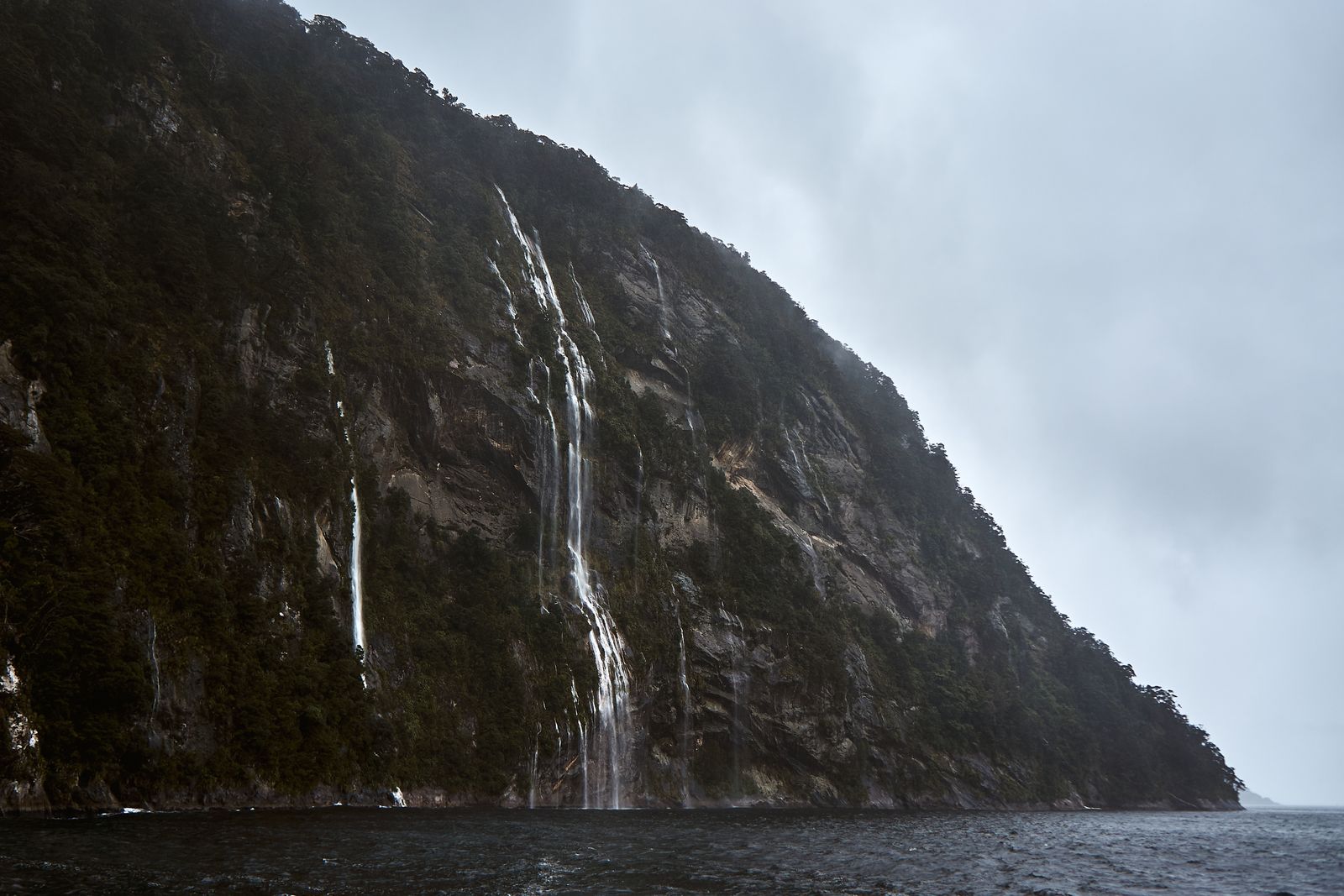
Three DOC-run huts (Clinton, Mintaro, Dumpling) sit along the route, each capped at 40 independent walkers a night with shared bunkrooms, shared kitchens, and cold running water. Camping is not permitted. There is no cell phone coverage anywhere on the track, and no vehicle access to either end, both of which matter more for health planning than they do for logistics: whatever you are carrying when you leave Glade Wharf is what you have until Sandfly Point.
Day-by-day plan
Day 1: Boat to Glade Wharf, easy valley walk to Clinton Hut
A road transfer from Te Anau to Te Anau Downs (about 30 minutes), then a roughly 75-minute boat cruise up Lake Te Anau to Glade Wharf. From there it's a short, mostly flat 5 km walk through beech forest along the Clinton River to Clinton Hut, 1 to 1.5 hours. This is deliberately the shortest day on the track. Use the extra afternoon to swim near the hut, sort your gear, and start the habit that matters for the rest of the trip: treat every liter of water you drink, hut tap or stream, from here forward.
Day 2: Clinton Valley to Mintaro Hut, the climb begins
A gradual climb of roughly 17.5 km and 6 hours, following the Clinton River up to its source at Lake Mintaro, past Hirere Falls with your first views of Mackinnon Pass and the Pompolona icefield ahead. This is the longest day by distance on the track. Eat and drink on a schedule rather than waiting until you feel depleted, since a poorly fueled day 2 makes day 3's pass climb harder than it needs to be.
Day 3: Over Mackinnon Pass to Dumpling Hut, Sutherland Falls side trip
The trip's centerpiece: a climb to the Mackinnon Pass Shelter at 1,154 m, the highest point on the track, with sweeping views back down the Clinton Valley, then a steep descent of roughly 1,000 m through alpine terrain and changing vegetation zones to Quintin Shelter. Most walkers add the 1.5-hour round-trip side hike to Sutherland Falls here, a 580 m, three-tiered waterfall and one of the tallest in the country, before continuing to Dumpling Hut. Roughly 13 km, 6 to 7 hours.
Weather turns quickly at the pass. Fiordland receives up to 9,000 mm of rain a year according to DOC, and this exposed alpine section is where the track's fall and hypothermia risk concentrates, DOC's own safety materials flag it directly. Pace the descent, and expect the knees and quads to feel it; this is the day the Rx-strength ibuprofen in your kit earns its place in your pack.
Want the health prep for New Zealand?
Get a 60-second pre-trip check: the vaccines, prescriptions, and altitude/seasonality notes that change the plan — built for your exact dates.
Day 4: Dumpling Hut to Sandfly Point, boat out to Milford Sound
The longest day by distance, about 18 km and 5.5 to 6 hours, following the Arthur River past the historic Boatshed, the dramatic Mackay Falls, and Bell Rock, before finishing the last stretch on a smooth track built by a prison labor gang in the 1890s. The day ends at Sandfly Point, where a short boat ride crosses to Milford Sound in time to connect with bus services back to Te Anau or on to Queenstown. True to its name, the wait for the boat comes with biting sandflies; DEET or picaridin repellent and covered ankles and wrists make the last hour considerably more pleasant.
Health prep for this trip
New Zealand's overall CDC risk profile is reassuring, its low-risk classification for travelers' diarrhea means under 8% of short-term visitors are affected, well below destinations with unsafe municipal water or limited food-safety infrastructure. The Milford Track is a different environment inside a low-risk country. DOC's own advice is to treat all hut and natural water before drinking it, since backcountry streams can carry Giardia and Campylobacter from wildlife even when the water runs clear. Standard methods are boiling for at least 1 minute (longer at altitude), filtering through a sub-1-micron filter, or chemical disinfection, per CDC guidance on backcountry water treatment.
Because you cannot exit the track early, cannot reach a pharmacy, and have no cell signal for two to three days at a stretch, Wandr's New Zealand Milford Track Travel Pack bundles the three prescriptions that cover the trip's realistic risks: azithromycin for bacterial traveler's diarrhea if water discipline slips, dicyclomine for the cramping that often comes with it, and Rx-strength ibuprofen for the knee and joint strain off Mackinnon Pass. None of these need to be started before the trip; they are there if day 2 or day 3 goes sideways and the nearest pharmacy is two hours from the roadend in Te Anau. Speak with a provider about your personal risk factors and any medications you already take before starting anything new.
New Zealand does not require any specific vaccinations for entry, and routine vaccines (measles, tetanus, influenza per your regular schedule) are the standard recommendation for most travelers here; confirm your own status with a provider ahead of any international trip.
What to pack
Huts do not provide cooking utensils, gas, or food. You need a stove, fuel, and every meal and snack for four days, plus a spare in case weather delays you a day.
Best time to go and what to avoid
DOC's Great Walks season runs late October through April, when bridges are installed, huts are ranger-staffed, and DOC actively manages the track's avalanche and flood risk. Outside that window, the Milford Track is unmanaged and recommended only for experienced, self-sufficient trampers carrying alpine and avalanche gear.
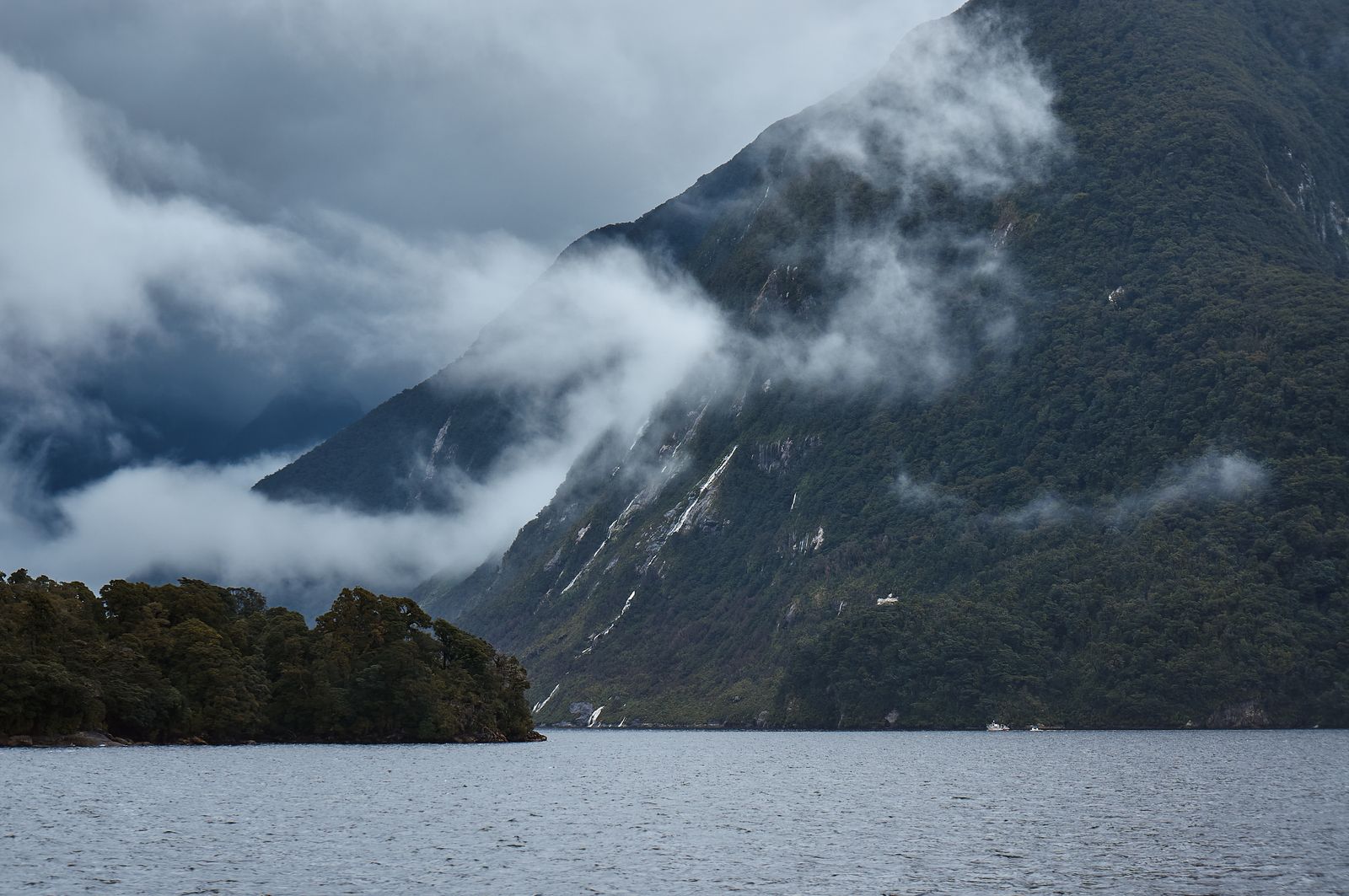
Fiordland's rainfall (up to 9,000 mm annually per DOC) means wet weather is possible in any month of the Great Walks season. Both the Clinton and Arthur Valleys can flood and become impassable during heavy rain, so building a spare day into your schedule is standard advice, not overcaution.
Cost expectations
Hut fees during the Great Walks season run around $152 USD-equivalent per adult per night for international visitors (three nights, so budget roughly $450 for huts alone), plus separate transport bookings for the Te Anau Downs boat and the Milford Sound return crossing. Add flights or a rental car to Te Anau/Queenstown, pre- and post-trek accommodation, and a stove/fuel setup if you do not already own one. This is a self-supported trek, not a guided walk, so the largest cost after huts and transport is simply getting yourself to Te Anau with the right gear.
Day-by-day plan
| Day | What you're doing | Health note |
|---|---|---|
| 1 | Boat to Glade Wharf, easy valley walk to Clinton Hut A road transfer from Te Anau to Te Anau Downs, then a roughly 75-minute boat cruise up Lake Te Anau to Glade Wharf. From there it is a short, mostly flat 5 km walk through beech forest along the Clinton River to Clinton Hut, 1 to 1.5 hours. | This is the shortest day on the track. Use the extra afternoon at the hut to hydrate, sort gear, and get in the habit of treating every liter of water from here forward, per DOC's advice. |
| 2 | Clinton Valley to Mintaro Hut, the climb begins A gradual, roughly 17.5 km, 6-hour climb following the Clinton River to its source at Lake Mintaro, passing Hirere Falls with the first views of Mackinnon Pass ahead. | The longest day by distance. Eat and drink on a schedule rather than waiting until you feel depleted, and keep treating water at every refill; New Zealand's backcountry catchments carry real Giardia and Campylobacter risk despite the country's low national baseline. |
| 3 | Over Mackinnon Pass to Dumpling Hut, Sutherland Falls side trip Climb to the 1,154 m Mackinnon Pass Shelter, the highest point on the track, then descend roughly 1,000 m through alpine terrain to Quintin Shelter. Most walkers add the round-trip side hike to Sutherland Falls, a 580 m three-tiered waterfall, before continuing to Dumpling Hut. Roughly 13 km, 6 to 7 hours. | Weather turns quickly at the pass. Fiordland gets up to 9,000 mm of rain a year per DOC, and this exposed alpine section carries the trip's highest fall and hypothermia risk. Rx-strength ibuprofen in your kit is there for the knee strain that shows up on the long descent. |
| 4 | Dumpling Hut to Sandfly Point, boat out to Milford Sound The longest day by distance, about 18 km and 5.5 to 6 hours, following the Arthur River past Mackay Falls and Bell Rock to Sandfly Point, then a short boat ride across to Milford Sound. | True to its name, Sandfly Point delivers biting midges while you wait for the boat. DEET or picaridin repellent, plus covered ankles and wrists, makes the wait tolerable. |
Frequently Asked Questions
Most trampers do not need anything beyond routine travel prep, since New Zealand is a low-risk country for food and waterborne illness by CDC standards. The 4-day, one-direction, hut-to-hut structure changes the calculus: shared kitchens, communal water sources, and no way to exit before Sandfly Point mean a short course of self-treat medication (azithromycin for traveler's diarrhea, dicyclomine for cramping, Rx-strength ibuprofen for joint strain) is worth carrying rather than hoping you will not need it.
DOC's own guidance is to treat all water on the track, both from hut taps and natural sources, before drinking it. Backcountry streams can carry Giardia and Campylobacter from possums, birds, and other wildlife even when the water looks perfectly clear. Boiling for at least 1 minute, filtering, or chemical disinfection are the standard methods.
DOC rates it Intermediate to Advanced. The distances (5 to 18 km per day) are manageable for most reasonably fit hikers, but day 3 includes a climb to 1,154 m and a roughly 1,000 m descent in a single push, and day 4 is 18 km with a fixed boat departure. Multi-day hiking experience and a broken-in pair of boots matter more than raw speed.
The Great Walks season runs late October through April, when DOC installs bridges, staffs the huts, and actively manages avalanche and flood risk. Outside that window the track is unmanaged, unbridged in places, and recommended only for experienced, self-sufficient trampers with alpine gear.
No. The Milford Track is walked in one direction with no road access and no cell phone coverage between Glade Wharf and Sandfly Point. If you need to leave early, you are relying on a DOC ranger to arrange evacuation. That constraint is the main reason to carry self-treat medication rather than plan on reaching a pharmacy.
DOC recommends it, and most trampers should treat it as non-negotiable given the track's weather variability, avalanche season overlap in early summer, and remote hut-to-hut structure. Confirm your policy covers wilderness evacuation, not just standard trip cancellation.
It is the track's finish line on Milford Sound, named for the biting midges that gather in the boat-waiting area. They are a nuisance rather than a health risk (New Zealand has no dengue, malaria, or other mosquito-borne disease of concern), but DEET or picaridin repellent and covered skin make the final wait considerably more pleasant.
DOC typically opens Great Walks season bookings in mid-May the year before, and the Milford Track's 40 independent-walker beds per hut sell out within minutes for the popular December-February window. Book the moment the window opens if you have specific dates in mind.
The Wandr Team is the editorial group at Wandr Health; every article is reviewed by a licensed clinician before publication.