
The 6-Day Mount Kinabalu Itinerary: The Health-Smart Borneo Version

A 6-day Mount Kinabalu itinerary runs Kota Kinabalu, two nights at Kinabalu Park, the Timpohon Gate to Laban Rata climb, a pre-dawn summit push to Low's Peak, and a Kinabatangan River rainforest add-on before flying home. The climb itself is a single compressed elevation jump: trailhead near 1,866 m to a mountain-hut sleep around 3,272 m in one push, well past the roughly 2,500 m mark where CDC's Yellow Book says acute mountain sickness becomes a meaningful risk. Most climbers are advised to discuss acetazolamide with a travel-health provider before the ascent. Malaria risk on Borneo is real but narrow, confined to Sabah and Sarawak's forested interior per CDC, not Kota Kinabalu or Peninsular Malaysia, so prophylaxis only matters if the rainforest leg is on the route.
Mount Kinabalu looks approachable on paper. Six days, a well-marked trail, no ropes or technical climbing. What the brochure doesn't spell out is that the standard route compresses a serious elevation gain into a single day, the kind of jump that most trekking guides handle over two or three days elsewhere in the world. This itinerary keeps the classic Kota Kinabalu to summit to Kinabatangan River structure, but treats the altitude profile and Borneo's specific malaria geography as the two decisions that actually shape the trip, not footnotes attached to a generic Southeast Asia climb.
Who this itinerary is for
This suits reasonably fit travelers who want a serious multi-day trek without needing mountaineering skills or gear. If you've done a long day hike with elevation gain and slept reasonably well above 2,500 m before, you have a sense of what the summit push will ask of you. First-time high-altitude trekkers can absolutely do Kinabalu, but should go in knowing this isn't a gentle warm-up mountain, the sleeping-elevation jump on day 3 is faster than most first Andes or Himalaya trips.
Returning trekkers who've handled Kilimanjaro or the Everest Base Camp trail will find Kinabalu shorter and less remote, but the single-day ascent to Laban Rata leaves less room to acclimatize gradually than either of those routes typically allows. Expect cooler, wetter conditions than a tropical itinerary might suggest once you're above the tree line, and expect the malaria conversation to depend entirely on whether you add the rainforest leg.
Travelers who only want the mountain, and skip the Kinabatangan River add-on entirely, can drop the malaria conversation from this itinerary altogether, since CDC's country guidance doesn't extend risk to Kota Kinabalu or the park area around the peak. That's worth deciding early, since it changes what you need to prep for and what you don't. Our Malaysia destination guide covers the broader country health picture if you're combining this trek with other stops on Peninsular Malaysia or elsewhere on Borneo.
The route
The trip starts and ends in Kota Kinabalu (KK), Sabah's coastal capital, which sits at sea level with no malaria risk according to CDC's country guidance. From KK, a roughly two-hour drive brings you inland and uphill to Kinabalu Park headquarters, around 1,563 m, where most climbers spend a night acclimatizing and meeting their mandatory mountain guide (required for all Kinabalu ascents).
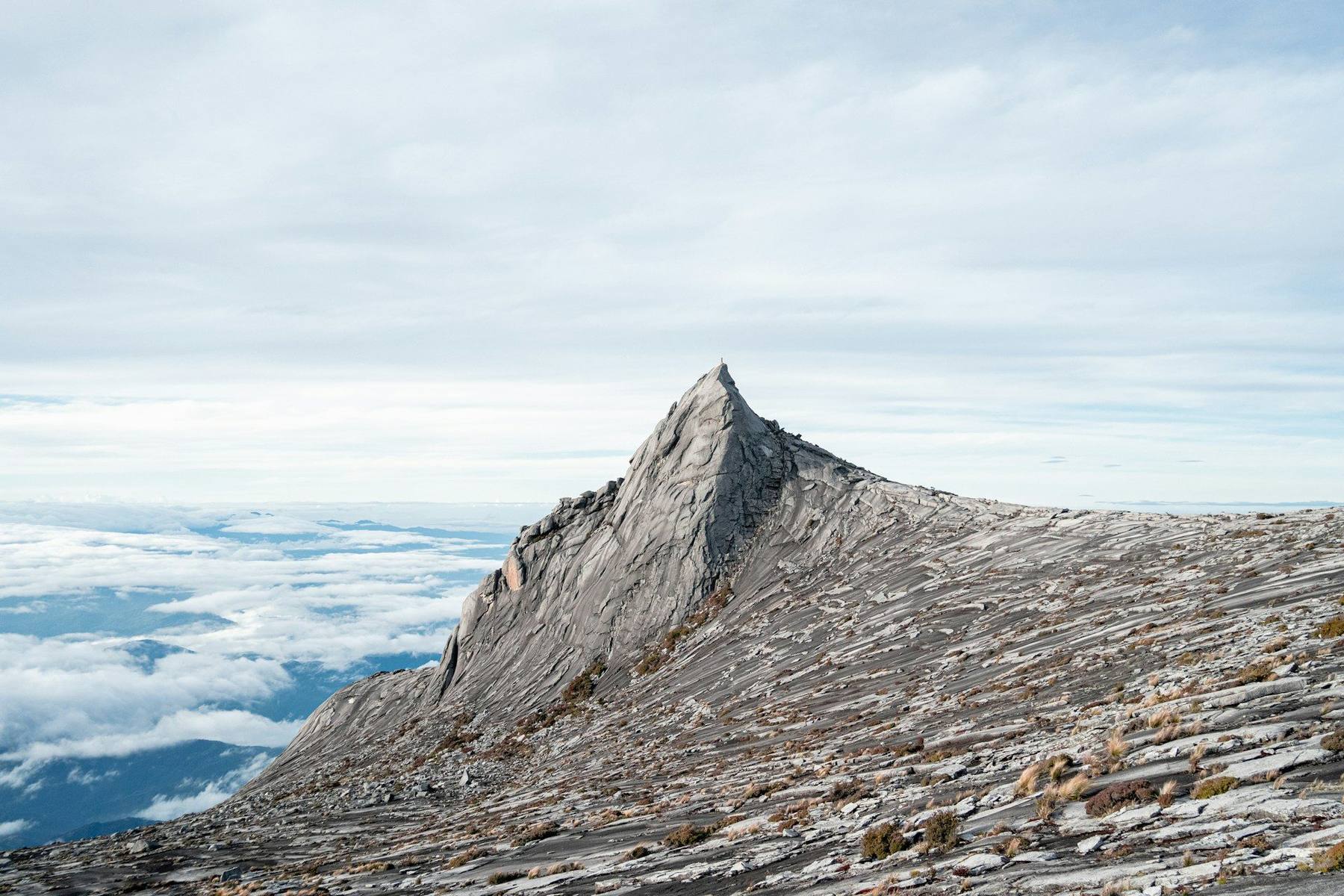
The climb itself runs from Timpohon Gate (about 1,866 m) up roughly 6 km of trail to Laban Rata rest house (about 3,272 m), where climbers sleep before a 2 am wake-up for the final push to Low's Peak, at about 4,095 m the highest point between the Himalayas and New Guinea. After summiting for sunrise, the same-day descent runs all the way back to Timpohon Gate, a brutal knee-testing stretch that many climbers underestimate.
From there, the itinerary breaks from the mountain entirely: a transfer toward Sandakan or the Kinabatangan River area adds a rainforest leg, river cruises for wildlife, and an overnight jungle lodge, before returning to KK for departure. This is also the leg that introduces Borneo's actual malaria risk, which CDC's guidance ties to the forested interior of Sabah and Sarawak, not the coastal cities you fly through.

Day-by-day plan
Day 1: Arrive Kota Kinabalu, sea-level orientation
Land in KK, settle into your hotel, and spend the afternoon at the waterfront or Gaya Street market. There's no malaria risk in the city itself per CDC's country guidance, so this day is about logistics and rest, not prophylaxis. If your provider has you on acetazolamide for the climb, confirm your start date now so you're not scrambling on day 2.
Day 2: Transfer to Kinabalu Park, acclimatization walk
The drive to Kinabalu Park HQ takes about two hours and puts you at roughly 1,563 m, your first real elevation exposure. Use the afternoon for a short nature trail and your mandatory guide briefing rather than pushing hard. This is the only night your body gets to adjust before the big single-day gain on day 3, so treat it as genuine acclimatization time, not a scenic layover.
Day 3: Climb to Laban Rata
This is the day the whole itinerary is built around. From Timpohon Gate (about 1,866 m) to Laban Rata (about 3,272 m) is roughly 6 km, but it's the elevation, not the distance, that matters clinically. You're gaining over 1,400 m of new sleeping elevation in one push, comfortably past the point where CDC's Yellow Book says acute mountain sickness becomes a meaningful risk, and faster than the graded-ascent pace CDC generally recommends above 2,500 m. Pace yourself, drink more water than feels necessary, and pay attention to headache, nausea, or poor appetite, common early signs your body is asking you to slow down.
Day 4: Pre-dawn summit push, full descent
A 2 am wake-up and headlamp-lit scramble over exposed granite gets most climbers to Low's Peak (about 4,095 m) for sunrise. Temperatures here commonly sit near or below freezing, so real layers matter, not just a windbreaker. After summiting, the descent runs the entire way back down to Timpohon Gate in a single day, a long, joint-punishing stretch where an anti-inflammatory like ibuprofen (taken as directed and only if you don't have a contraindication) earns its place in a trekking kit. From Timpohon Gate, transfer begins toward Sandakan or the Kinabatangan River for the next leg.
Want the health prep for Malaysia?
Get a 60-second pre-trip check: the vaccines, prescriptions, and altitude/seasonality notes that change the plan — built for your exact dates.
Day 5: Kinabatangan River rainforest cruise
Dawn and dusk river cruises are the best windows for spotting proboscis monkeys, hornbills, and, with some luck, pygmy elephants along the Kinabatangan. Overnight at a riverside lodge. This is the day that actually changes your health math for the trip: CDC's guidance places Malaysia's malaria risk in the forested interior of Sabah and Sarawak, not in KK or Peninsular cities, so prophylaxis is only relevant to this itinerary because of this specific add-on. Borneo's malaria picture is also unusual, CDC's Emerging Infectious Diseases journal reports that P. knowlesi, a species that normally infects macaques, is now the leading cause of human malaria cases in Malaysian Borneo, which is worth naming explicitly when you talk to your provider rather than assuming a generic Southeast Asia malaria conversation covers it. Standard regional options like atovaquone-proguanil are generally considered effective against it. This kind of extended rural, riverside evening exposure is also the profile where CDC frames Japanese encephalitis vaccination and rabies pre-exposure vaccination as worth discussing, depending on how long you're out here and how much animal contact the trip involves.

Day 6: Return transfer and departure
Transfer back to KK or fly out via Sandakan. If you took malaria prophylaxis for the Kinabatangan leg, most regimens require continuing the course for several days to a week after leaving the risk area, don't stop the day you fly out. Confirm your specific regimen's post-exposure schedule with whoever prescribed it.
Health prep for this trip
Start the conversation with a travel-health provider 6 to 8 weeks out, this trip has two separate, unrelated health decisions bundled into one itinerary: altitude prophylaxis for the climb and malaria prophylaxis for the river leg, and they don't share a timeline. If acetazolamide is right for you, most travelers start it a day or two before their first significant elevation gain, meaning your day 2 transfer to Kinabalu Park HQ, not the summit push itself. If you're adding the Kinabatangan leg, confirm which prophylaxis regimen fits your route and medical history, since CDC lists several options for this specific risk area. Routine and travel vaccines, commonly Hepatitis A and Typhoid for Malaysia, are worth confirming are current well before departure, and if your Kinabatangan stay is extended or heavily rural, ask specifically about Japanese encephalitis and rabies pre-exposure vaccination rather than assuming a standard consult covers them. Our Mount Kinabalu Borneo travel medicine kit is built around exactly this route, and our acetazolamide page covers dosing conversations to have with your provider.
What to pack
Pack in real layers, not just a rain jacket: a moisture-wicking base layer, a warm mid-layer, and a real insulated shell for summit morning, when temperatures near Low's Peak commonly sit at or below freezing. Bring a headlamp with spare batteries for the 2 am start, trekking poles for the long descent, and broken-in trail shoes with good grip for wet granite. A basic travel-medicine kit covering altitude, digestive upset, and pain relief is worth having on hand regardless of prophylaxis choices, and if the Kinabatangan leg is on your route, pack insect repellent with DEET or picaridin and consider permethrin-treated clothing for the rainforest evenings.
Best time to go and what to avoid
Most climbers should avoid scheduling the summit push during the wettest months if the itinerary allows flexibility, since cloud cover both obscures the sunrise view that's the main reward for the 2 am start and makes the granite slabs near the top more slippery. Dengue risk, per CDC's standing Level 1 Global Dengue travel notice for Malaysia, is present year-round and isn't concentrated in a single season the way monsoon rain is, so mosquito precautions matter on both the mountain and river legs regardless of when you go.
Cost expectations
Budget for a mandatory certified guide (required for every Kinabalu ascent), a climbing permit, and a Laban Rata bed booked well in advance, since capacity is limited and sells out months ahead in peak season. The Kinabatangan River leg adds lodge and cruise costs on top of the mountain package. Most travelers should expect this to run as a mid-range adventure trip rather than a budget backpacking stop, largely because of the mandatory guide and permit system rather than the accommodation itself.
Meals at Laban Rata are included in most climb packages and served buffet-style, a welcome convenience given how little most climbers want to cook at 3,272 m after a full day on the trail. Porters are available for an additional fee if you'd rather not carry a full overnight pack up to the rest house, worth considering if you're already managing acetazolamide, hydration, and altitude fatigue on the same climb day. Factor in a buffer day or two around the Kinabatangan leg as well, river cruise timing depends on tides and wildlife activity, and a rigid same-day connection between the mountain descent and the river lodge can leave you rushing through the one part of this trip that's supposed to be a decompression stop after the summit push.
Day-by-day plan
| Day | What you're doing | Health note |
|---|---|---|
| 1 | Arrive Kota Kinabalu, sea-level orientation Land in Kota Kinabalu (KK), settle in, walk the waterfront and Gaya Street area. | No malaria risk in KK itself. If you're starting acetazolamide prophylactically for the climb, most travelers begin it the day before their first elevation gain, not on arrival. |
| 2 | Transfer to Kinabalu Park, acclimatization walk Drive roughly 2 hours to Kinabalu Park HQ (about 1,563 m), short nature-trail walk, briefing with your mountain guide, overnight near the park. | This is your only true acclimatization night before the climb. Hydrate well and watch for early headache or nausea, the first honest signal your body gives you at altitude. |
| 3 | Climb to Laban Rata Start at Timpohon Gate (about 1,866 m) and climb roughly 6 km to Laban Rata rest house (about 3,272 m), a full day's trek. | This is the health-critical day. You gain over 1,400 m of new sleeping elevation in a single push, well past the altitude where CDC says acute mountain sickness risk becomes real. Acetazolamide, if you're using it, should already be on board. |
| 4 | Pre-dawn summit push, full descent Wake around 2 am, climb roughly 2.7 km to Low's Peak (about 4,095 m) for sunrise, then descend all the way back to Timpohon Gate and transfer toward Sandakan or the Kinabatangan River. | Summit morning is cold, dark, and physically demanding on legs already fatigued from day 3. The descent is where knees and ankles take the real toll, ibuprofen earns its place in the kit here. |
| 5 | Kinabatangan River rainforest cruise River cruises at dawn and dusk for wildlife (proboscis monkeys, hornbills, and with some luck pygmy elephants), overnight at a riverside lodge. | This is the leg that changes your malaria math. CDC lists Borneo's forested interior, not Kota Kinabalu, as risk territory, so prophylaxis only applies because you added this river leg. |
| 6 | Return transfer and departure Transfer back to Kota Kinabalu or fly out via Sandakan. | Continue any malaria prophylaxis for the full course after leaving the risk area, most regimens require several days to a week of follow-through post-exposure. |
Frequently Asked Questions
Not everyone does, but the climb's structure makes it worth discussing. CDC's Yellow Book notes acute mountain sickness risk becomes meaningful above roughly 2,500 m, and the standard Kinabalu route takes most climbers from Timpohon Gate (about 1,866 m) to an overnight sleep at Laban Rata (about 3,272 m) in a single day, a faster gain than the graded-ascent pace CDC generally recommends. Many climbers discuss acetazolamide (often 125 mg twice daily, started a day or two before the ascent) with a travel-health provider given this compressed profile.
It's a well-marked, non-technical trail rather than a mountaineering route, but the combination of distance, elevation gain, and a pre-dawn summit push makes it physically demanding, especially for travelers without recent hiking fitness. Most climbers should train with multi-hour hikes with a loaded pack in the months before departure.
Not if you stay within Kota Kinabalu and the park area around the mountain. CDC's country guidance confines Malaysia's malaria risk to the forested interior of Sabah and Sarawak on Borneo, so prophylaxis becomes relevant specifically if your itinerary adds a rainforest leg, like a Kinabatangan River cruise. Speak with a provider about whether your specific route qualifies.
P. knowlesi is a malaria species that normally infects macaque monkeys but has become the leading cause of human malaria cases in Malaysian Borneo, according to CDC's Emerging Infectious Diseases journal. Standard prophylaxis options for the region, including atovaquone-proguanil, are generally considered effective against it, but this is a conversation to have with your provider rather than something to self-manage.
Most climbers target the drier stretch roughly March through August, when trails are less slick and summit sunrise views are more likely to be unobstructed. The wetter November through February window brings more cloud cover and rain, which can affect both footing and visibility at the top.
Temperatures at Low's Peak (about 4,095 m) commonly sit near or below freezing before sunrise, especially with wind chill. Pack real insulating layers, gloves, and a headlamp, this is not a tropical hike once you're above Laban Rata.
It depends on how rural and extended your itinerary gets. CDC's guidance frames Japanese encephalitis vaccination as worth considering for travelers with longer stays in rural, agricultural areas, particularly with evening outdoor exposure, and generally advises discussing rabies pre-exposure vaccination for extended rainforest travel with animal contact risk. A short Kinabatangan add-on may or may not meet that bar, a travel-health provider can help you decide based on your exact plans.
It can be. Acute mountain sickness doesn't care that the trip is only 6 days, it responds to how fast you gain sleeping elevation, and Kinabalu's structure is a fast gain by design. Most cases are mild (headache, nausea, poor sleep) and resolve with rest or descent, but symptoms that worsen instead of improve, or any confusion or difficulty walking a straight line, are reasons to descend and seek care immediately.
Alec Freling, MD is a board-certified emergency medicine physician and co-founder of Wandr Health with ER experience treating returning travelers.