
Tajikistan Travel Health Guide: Malaria-Free Since 2023, a 15,272-Foot Mountain Pass, and the Permit You Need Beyond Your Visa
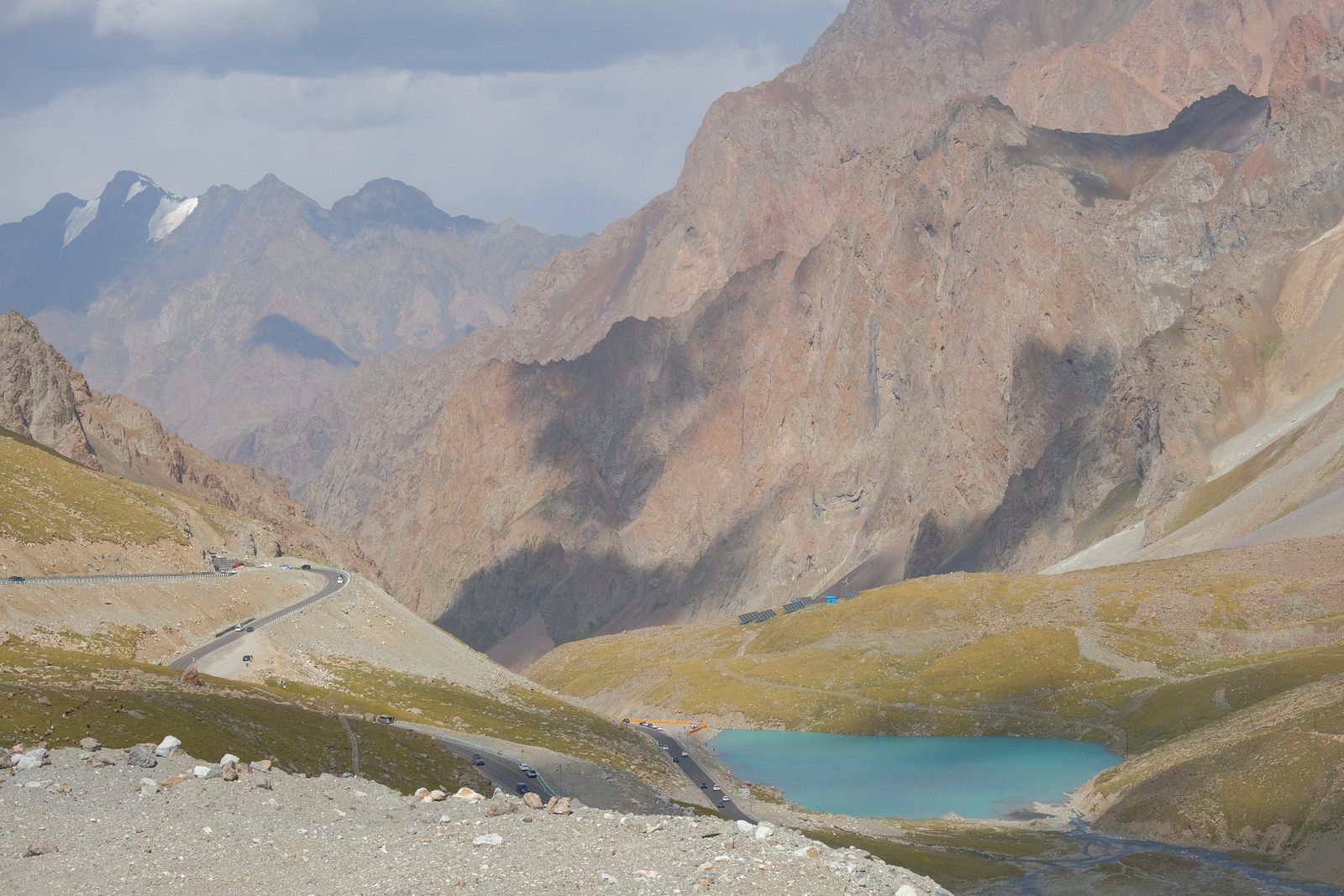
Tajikistan was certified malaria-free by the World Health Organization in 2023 and has maintained that status through active surveillance since. That does not make it a low-preparation destination. The Pamir Highway's Ak-Baital Pass reaches 4,655 meters (15,272 feet), the highest paved road point in the former Soviet Union, with essentially no acclimatization time for most itineraries. A 2023 hospital-associated Crimean-Congo hemorrhagic fever outbreak in Dushanbe killed one of four confirmed patients, and rabies remains endemic enough that Tajikistan sits on the CDC's high-risk list for dog rabies. Foreign visitors to the Pamir region also need a separate GBAO permit alongside their e-visa, a logistics step with real consequences if skipped. In our clinical experience, altitude and access to care, not an exotic disease, are what catch most US travelers off guard here. Start your visit on Wandr before you fly.
Tajikistan Travel Health Guide: Malaria-Free Since 2023, a 15,272-Foot Mountain Pass, and the Permit You Need Beyond Your Visa
Tajikistan was certified malaria-free by the World Health Organization in 2023 and has maintained that status through active surveillance since. That does not make it a low-preparation destination. The Pamir Highway's Ak-Baital Pass reaches 4,655 meters (15,272 feet), the highest paved road point in the former Soviet Union, with essentially no acclimatization time for most itineraries. A 2023 hospital-associated Crimean-Congo hemorrhagic fever outbreak in Dushanbe killed one of four confirmed patients, and rabies remains endemic enough that Tajikistan sits on the CDC's high-risk list for dog rabies. Foreign visitors to the Pamir region also need a separate GBAO permit alongside their e-visa, a logistics step with real consequences if skipped. In our clinical experience, altitude and access to care, not an exotic disease, are what catch most US travelers off guard here. Start your visit on Wandr before you fly.
By Mark Karam, PA-C Last updated: September 23, 2026
Quick Facts: Tajikistan Health at a Glance
- Region: Central Asia, landlocked, bordered by Afghanistan, China, Kyrgyzstan, and Uzbekistan. Roughly 93% of the country is mountainous. Major draws: the capital Dushanbe, the Pamir Highway (the M41, one of the world's highest international highways), the Wakhan Corridor, and Iskanderkul Lake.
- CDC/WHO Malaria Risk: None. The World Health Organization certified Tajikistan malaria-free in 2023 after eliminating locally transmitted Plasmodium falciparum and vivax malaria.
- Key Health Risks: Extreme, rapid-ascent altitude exposure on the Pamir Highway, rabies in domestic and stray animals, a documented 2023 hospital-associated Crimean-Congo hemorrhagic fever cluster in Dushanbe, and limited medical infrastructure outside the capital.
- Recommended Vaccines: Hepatitis A for essentially all travelers, typhoid, a routine tetanus booster if more than 10 years since the last dose, hepatitis B for longer stays or higher-risk activity, and rabies pre-exposure vaccination for extended rural or Pamir travel.
- Recommended Medications: Acetazolamide if the Pamir Highway or any high-altitude trekking is on the itinerary, a prescription antibiotic for traveler's diarrhea, and something for motion sickness on the long, winding mountain drives.
- US State Department Advisory: Level 2, Exercise Increased Caution, updated September 4, 2026, with parts of the Afghan border and the Gorno-Badakhshan Autonomous Oblast (GBAO) rated Level 3, Reconsider Travel.
- Travel Insurance Recommended: Strongly. Medical care is limited even in Dushanbe and genuinely thin along the Pamir Highway, and a serious altitude, traffic, or medical event in the mountains can require evacuation.
Overview: A Malaria Success Story Wrapped Around Serious Terrain
Tajikistan's tourism numbers are climbing fast. The country welcomed 889,400 foreign tourists in just the first half of 2026, a 16.7% increase over the same period in 2025, with most arrivals coming from other former Soviet states and a smaller but growing share from farther afield. Travel search interest in Tajikistan reportedly jumped 64% year over year in one recent industry report, the fastest growth of any destination tracked. Most US travelers land in Dushanbe for the capital's Soviet-meets-Persian architecture, then head east toward the Pamir Highway, the Wakhan Corridor, or the Fann Mountains for trekking.
The health picture is more layered than "malaria-free, go enjoy it" suggests. There is no malaria risk anywhere in the country. But the Pamir Highway pushes travelers to some of the highest drivable elevations on earth with little time to acclimatize, rabies is endemic and Tajikistan appears on US health authorities' high-risk list for it, a 2023 hospital outbreak showed Crimean-Congo hemorrhagic fever is a real and sometimes fatal risk in a clinical setting, and the country's most scenic region requires a permit most travelers have never heard of before they start planning. None of that should keep a well-prepared traveler home. It does mean Tajikistan deserves a more specific pre-trip checklist than its rising popularity alone would suggest.
Malaria: Eliminated, and Recently Confirmed
You do not need antimalarial medication for any standard Tajikistan itinerary. The World Health Organization certified Tajikistan malaria-free in 2023, and according to that WHO publication, the country has "maintained a well-organized surveillance system" since, backed by "effective preventive activities" designed to catch and stop any reintroduction before it spreads. A peer-reviewed account of the elimination effort in the medical literature documents the decades of work behind that certification, including a resurgence of transmission in the 1990s and 2000s that the country's health system had to bring back under control before reaching elimination. If your itinerary continues on to a malaria-endemic country afterward, our clinical team can prescribe Malarone (atovaquone-proguanil) as part of your pre-trip visit, but Tajikistan itself does not require it.
Altitude: The Pamir Highway Is Not a Typical Mountain Drive
This is the risk that separates a real Tajikistan health guide from a generic one. The Pamir Highway, officially the M41, is one of the highest international highways in the world, and its Tajik stretch climbs to Ak-Baital Pass at 4,655 meters (15,272 feet), the highest point on the entire route and the highest paved road elevation anywhere in the former Soviet Union. Unlike a multi-day trek where climbers build in rest days, most Pamir Highway itineraries cover this elevation gain by vehicle over the course of a single trip, often reaching well above 4,000 meters within the first day or two on the road.
"In our clinical experience, travelers plan carefully for the cold and the isolation of a Pamir Highway trip, and then underestimate the altitude because they're sitting in a car, not climbing on foot," says Mark Karam, PA-C, physician associate and co-founder of Wandr Health. "Acute mountain sickness does not care whether you earned the elevation by hiking or by four-wheel drive. The mechanism is the same, and vehicles get you there far faster than your body can adapt."
Watch for headache, nausea, dizziness, fatigue, or loss of appetite in the first 24 to 48 hours after a rapid ascent, and treat worsening symptoms as a signal to descend rather than push on, particularly given how far many stretches of the highway sit from medical care. If your itinerary includes the Pamir Highway, a trek in the Fann or Pamir Mountains, or any multi-day travel above 3,000 meters, talk to our clinical team about acetazolamide (Diamox) before you go. Read the full picture at Altitude Sickness: Symptoms, Prevention & Treatment, and see our Colorado altitude guide for the broader framework behind rapid-ascent risk.
Crimean-Congo Hemorrhagic Fever: A 2023 Hospital Outbreak Worth Knowing About
This is the fact almost no generic Tajikistan travel guide mentions, and it is directly relevant to how you should think about medical care if something goes wrong on your trip. In June 2023, a hospital-associated outbreak of Crimean-Congo hemorrhagic fever (CCHF) occurred in Dushanbe, documented in a peer-reviewed case investigation. The index patient died on June 16 from internal bleeding after the infection went undiagnosed; a surgeon and a physician who had operated on that patient, and a laboratory assistant who had given the patient a direct blood transfusion, all later tested positive for CCHF, for a total of four confirmed cases and one death. Investigators traced the spread to gaps in infection control, including inadequate personal protective equipment during surgery and the use of direct blood transfusion because of resource limitations. Of 29 healthcare worker contacts who were tested, isolated, and given prophylactic ribavirin as a precaution, none developed secondary infections.
CCHF itself is a tick-borne and livestock-contact disease endemic across Central Asia, not something typical tourists are likely to contract directly. There is no CCHF vaccine and no medication in Wandr's catalog treats it. The practical takeaway for travelers is less about CCHF exposure and more about what the outbreak revealed: healthcare settings in Tajikistan can have real infection-control gaps, which is one more reason travel insurance with medical evacuation coverage matters here, not just for altitude or accidents but for the possibility that you would want care outside the country for a serious illness. For tick exposure specifically, use an EPA-registered repellent, avoid contact with livestock and their tissues in rural areas, and seek prompt medical evaluation for any unexplained fever after rural travel.
Rabies: Endemic, and on the CDC's High-Risk List
Rabies is not a theoretical concern in Tajikistan. The country appears on the CDC's list of countries considered high-risk for dog rabies, and a peer-reviewed epizootic survey identifies Khatlon region and Central Tajikistan as the areas with the highest levels of rabies infection in animal populations, with the same research noting that veterinary authorities register and vaccinate dogs and cats only partially, which the study's authors argue increases the infection risk to people.
"Any bite or scratch from a dog, cat, or wild animal in Tajikistan needs the same response as anywhere else rabies is endemic," says Mark Karam, PA-C. "Wash the wound with soap and running water for a full 15 minutes, then get evaluated the same day. Post-exposure treatment works, but only if it starts promptly, and rabies is essentially always fatal once symptoms begin." Rabies pre-exposure vaccination is worth a real conversation with our clinical team if your trip includes extended rural travel, homestays in mountain villages, or higher-risk animal contact. Read the full picture at Rabies Vaccine: A Traveler's Guide, and Wandr books rabies pre-exposure vaccine appointments at a partner pharmacy near you. Book your vaccine appointment before you fly.
The GBAO Permit: A Logistics Step That Is Not Optional
This is a practical, non-medical fact worth flagging honestly, because it trips up travelers who only plan around their visa. The Gorno-Badakhshan Autonomous Oblast, the mountainous eastern region that contains the Pamir Highway and the Wakhan Corridor and covers nearly half of Tajikistan's territory, requires a separate GBAO permit for every foreign visitor, in addition to a standard Tajikistan e-visa or embassy visa. Checkpoints throughout the region check for this permit, and travelers without one are turned back and fined. The most common way to obtain it is to apply for it alongside your e-visa through the official portal, typically adding a modest fee to the visa cost and a few business days of processing.
This guide covers health preparation only, not visa or immigration requirements, and Wandr does not make visa or immigration determinations. Confirm current e-visa and GBAO permit requirements directly with Tajikistan's official e-visa portal or the nearest Tajikistan embassy before you book travel into the Pamir region, since these requirements can change without notice.
Food and Water Safety
Tap water in Tajikistan, including in Dushanbe, is not safe to drink untreated. Stick to bottled or properly filtered water throughout your trip, avoid ice unless you know it was made from purified water, and be cautious with unpasteurized dairy, raw or undercooked meat and fish, and food that has been sitting at room temperature, particularly from street vendors. As in most of the destinations in this series, ordinary traveler's diarrhea from food and water, not a single dramatic disease, remains the most common reason a visitor to Tajikistan ends up needing a prescription mid-trip.
What to Pack: Practical Medications
- Altitude: Acetazolamide is worth discussing with our clinical team if the Pamir Highway, a Fann Mountains trek, or any ascent above roughly 3,000 meters is on your itinerary, given how quickly the elevation gain happens by vehicle.
- Traveler's diarrhea: Azithromycin is our first-line prescription antibiotic; ciprofloxacin is a reasonable alternative when azithromycin is not appropriate. An antispasmodic (dicyclomine) can help with cramping.
- Motion sickness: The Pamir Highway's long, winding mountain switchbacks are a common trigger. Meclizine or a scopolamine patch are both reasonable options depending on trip length.
- General nausea: Ondansetron is useful for nausea from altitude, mountain roads, or general travel illness.
- Sleep and anxiety: Hydroxyzine can help with travel anxiety or disrupted sleep on the long connecting flights most US travelers need to reach Dushanbe.
Our providers review your health profile and itinerary before prescribing, so you get a kit that fits your actual trip rather than a generic list.
Vaccines: What to Get Before You Go
- Hepatitis A: Recommended for essentially all previously unvaccinated travelers, given the food and water safety picture described above.
- Typhoid: Recommended, particularly for travelers spending time outside major hotels and tourist restaurants.
- Hepatitis B: Recommended for travelers at increased risk, including longer stays or higher-risk activity.
- Routine tetanus-diphtheria booster: Confirm your status is current if it has been more than 10 years.
- Rabies pre-exposure vaccination: Worth a real conversation with our clinical team for extended rural or Pamir travel, homestays, or higher-risk animal contact, given the rabies picture described above.
Vaccines on Wandr work differently from prescriptions: you pick a partner pharmacy location and time, we book the appointment, and the pharmacist administers your travel vaccines on-site. Schedule your vaccine appointments through Wandr before you fly.
Travel Advisory and Practical Safety
The US State Department rates Tajikistan Level 2, Exercise Increased Caution, in an advisory last updated September 4, 2026, citing the risk of terrorism, unexploded landmines and cluster munitions along the Afghan-Tajik and Uzbek-Tajik borders and in the Vakhsh and Rasht valleys, and a limited ability to assist dual US-Tajik nationals. The advisory rates parts of the Afghan border area and the Gorno-Badakhshan Autonomous Oblast, including the Pamir Highway region, at Level 3, Reconsider Travel, due to the potential for armed border skirmishes between Tajik and Kyrgyz border guards, particularly near Isfara and the Vorukh enclave. This advisory is separate from, and has nothing to do with, the altitude, rabies, or CCHF information in this guide; each is tracked and updated independently. Review the current advisory and any region-specific guidance directly with the State Department before finalizing an itinerary that includes border areas or the GBAO region.
Health and Safety Tips
- Ascend gradually where possible on any Pamir Highway or mountain itinerary, and know the early signs of altitude illness even if you are traveling by vehicle rather than on foot.
- Stick to bottled or filtered water throughout your trip, including in Dushanbe, and avoid ice and unpasteurized dairy.
- Avoid contact with stray or wild animals, and seek same-day medical evaluation for any bite or scratch.
- Use an EPA-registered insect repellent and avoid contact with livestock tissue in rural areas as a precaution against tick-borne and other vector-borne illness.
- Confirm your current e-visa and GBAO permit status directly with official Tajikistan government sources well before departure if your itinerary includes the Pamir region.
- Carry a copy of your prescriptions and keep medications in their original, labeled packaging.
FAQ
Do I need malaria pills for Tajikistan? No. Tajikistan was certified malaria-free by the World Health Organization in 2023 after eliminating local transmission, and the country has maintained a well-organized surveillance system since. If your itinerary continues to a malaria-endemic country afterward, our clinical team can prescribe Malarone for that leg of the trip.
Is Tajikistan safe to visit in 2026? The US State Department rates Tajikistan Level 2, Exercise Increased Caution, in an advisory updated September 4, 2026, citing terrorism risk, landmines along certain border areas, and limited consular access for dual nationals. Parts of the Afghan border and the Gorno-Badakhshan region are rated Level 3, Reconsider Travel. Most standard Dushanbe and Pamir Highway tourist itineraries fall outside the higher-risk zones, but travelers should review the current advisory before finalizing plans.
What is the GBAO permit, and do I need one? The GBAO permit is a separate travel authorization required for all foreign visitors entering Tajikistan's Gorno-Badakhshan Autonomous Oblast, the region containing the Pamir Highway and Wakhan Corridor. It is required in addition to your standard e-visa, and checkpoints throughout the region check for it. This guide covers health preparation only; confirm current visa and permit requirements with Tajikistan's official e-visa portal or the nearest embassy before you travel.
Will I get altitude sickness on the Pamir Highway? It is a genuine risk. The highway's Ak-Baital Pass reaches 4,655 meters (15,272 feet), the highest paved road elevation in the former Soviet Union, and most itineraries cover that elevation gain by vehicle over a day or two with little time to acclimatize. Watch for headache, nausea, dizziness, or fatigue after rapid ascent, and descend if symptoms worsen rather than continuing on.
Is rabies a real risk in Tajikistan? Yes. Tajikistan is on the CDC's list of countries considered high-risk for dog rabies, and a peer-reviewed survey identifies Khatlon region and Central Tajikistan as areas with the highest levels of animal rabies infection. Any bite or scratch from a dog, cat, or wild animal needs an immediate 15-minute wound wash and same-day medical evaluation.
What happened with Crimean-Congo hemorrhagic fever in Dushanbe? In June 2023, a hospital-associated CCHF outbreak in Dushanbe resulted in four confirmed cases and one death, after gaps in infection control, including inadequate protective equipment during surgery, allowed the virus to spread from an undiagnosed patient to two treating clinicians and a lab worker. None of the 29 healthcare worker contacts who received prophylactic treatment developed secondary infections. It is a reminder that healthcare settings can carry real infection-control gaps, which is one more reason to carry travel insurance with medical evacuation coverage.
Is tap water safe to drink in Tajikistan? No. Stick to bottled or properly filtered water throughout your trip, including in Dushanbe, and be cautious with ice, unpasteurized dairy, and food from street vendors.
Do I need travel insurance for Tajikistan? Yes, strongly. Medical care is limited even in Dushanbe and genuinely thin along the Pamir Highway and in rural areas, and a serious altitude event, traffic injury, or illness in the mountains can require costly evacuation.
The Bottom Line
Tajikistan is not a malaria destination, and its 2023 WHO certification is a genuine public health success story. But the Pamir Highway pushes travelers to some of the most extreme drivable altitude on earth with little time to adjust, a 2023 hospital outbreak showed Crimean-Congo hemorrhagic fever is a real risk in local healthcare settings, rabies remains endemic enough to land the country on the CDC's high-risk list, and the country's most popular region requires a permit many travelers never hear about until they start planning. None of that calls for an elaborate medical kit, but it does call for a real answer on acetazolamide if the Pamir Highway is on your itinerary, a current rabies conversation for extended rural travel, and travel insurance with evacuation coverage. Our providers can build the right prevention plan for your specific trip. Start your visit on Wandr, or explore our full travel medication lineup and vaccine booking before you fly.
Planning a wider Central Asian trip? Read our guides to Uzbekistan, Kyrgyzstan, Kazakhstan, and Turkmenistan.
This article is for general educational purposes and is not a substitute for personalized medical advice. Medication and vaccine recommendations depend on your individual health history, itinerary, and length of stay. This guide does not provide visa or immigration determinations; confirm current e-visa, GBAO permit, and entry requirements with Tajikistan's official e-visa portal or the nearest Tajikistan embassy before you travel. Get travel insurance with medical evacuation coverage before departure.
Sources
- World Health Organization. Towards a malaria-free world: elimination of malaria and prevention of re-establishment in Tajikistan (2023 certification). https://www.who.int/publications/i/item/9789240112261
- Elimination of Plasmodium falciparum malaria in Tajikistan. PMC. https://pmc.ncbi.nlm.nih.gov/articles/PMC5450305/
- Travel Advisory (aggregator of US State Department data). Tajikistan travel advisory, Level 2, last updated September 4, 2026. https://www.traveladvisory.io/advisory/tajikistan
- Wikipedia (citing highway survey data). Ak-Baital Pass: elevation and location on the M41 Pamir Highway. https://en.wikipedia.org/wiki/Ak-Baital_Pass
- Hospital-associated outbreak of Crimean-Congo Hemorrhagic Fever, Dushanbe, Tajikistan, 2023. PMC / Open Forum Infectious Diseases. https://pmc.ncbi.nlm.nih.gov/articles/PMC11778832/
- Restored CDC. High-risk countries for dog rabies (Tajikistan listed). https://restoredcdc.org/www.cdc.gov/importation/dogs/high-risk-countries.html
- Caspian Post. Tajikistan sees tourism boom as nearly 900,000 foreign visitors arrive in six months (2026). https://caspianpost.com/tajikistan/tajikistan-sees-tourism-boom-as-nearly-900-000-foreign-visitors-arrive-in-six-months
- DoVisa. Tajikistan GBAO Permit 2026: Pamir Highway Travel Authorization guide. https://dovisa.com/blog/tajikistan-gbao-permit-guide
Mark Karam, PA-C is a board-certified Physician Associate with emergency and urgent care experience and co-founder of Wandr Health.